Cloud wallet
Balance, top-ups and spending managed centrally and securely.
Electronic fare collection · Ticketing
Busae is a fare collection system for buses that charges, validates and controls every fare with cash, NFC cards, QR codes and EMV bank cards, with balances held in the cloud.
What it is
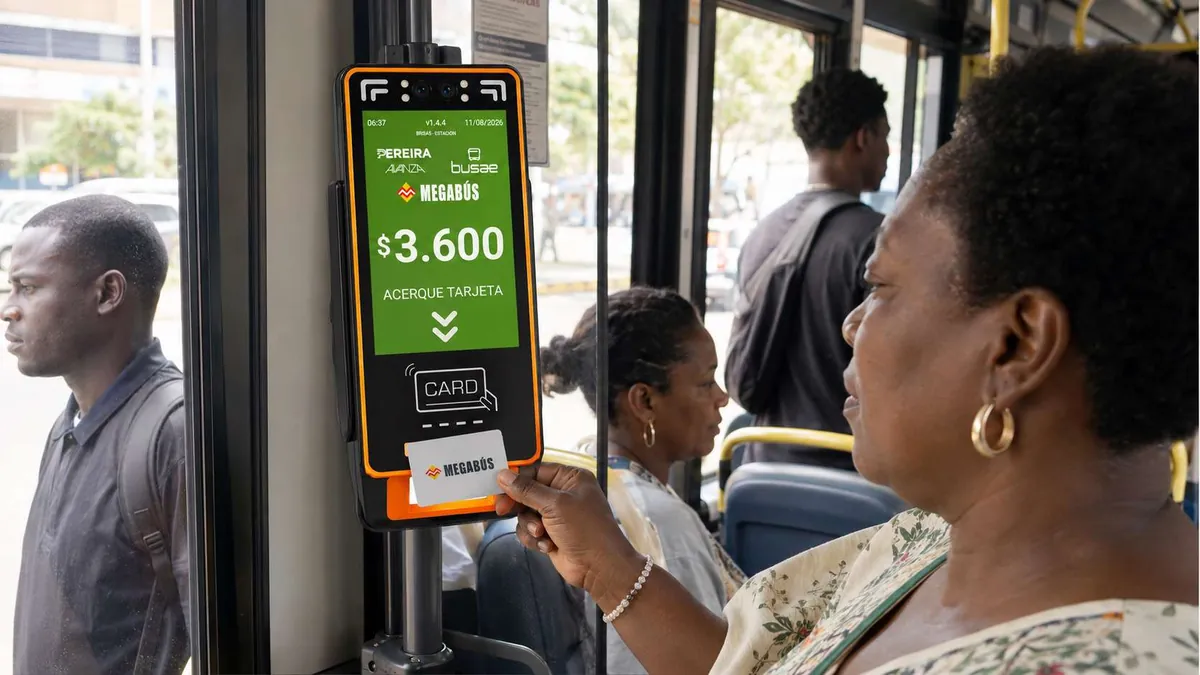
A fare collection system is the software and equipment used to charge the fare, validate the journey and control the revenue of every bus. It is also known as Automatic Fare Collection (AFC) or simply ticketing.
Busae runs on Android devices: the driver or the validator charges on board, ticket offices sell and top up, inspectors check, and every sale reaches the cloud platform, by bus, route and driver.
It is built for urban, intercity and long-distance buses, and it comes at a fixed price per bus.
How it works
The passenger buys a ticket or tops up their card at a ticket office with the Busae Ticket Office app, at a top-up point or, where integrated, at shops and mobile network operators.
When boarding, they pay or validate: in cash with the driver, by tapping an NFC or bank card, or by showing a QR code.
The sale is recorded in the Busae Driver app or the validator and sent to the platform. If there is no coverage, it is stored on the device and synced when the connection returns.
The control centre sees the sales of the whole fleet, and inspectors check payments on board with the Busae Inspector app.
Sales by bus, route and driver in under 2 minutes, in a shared cloud cash box for the whole fleet.
Payment methods
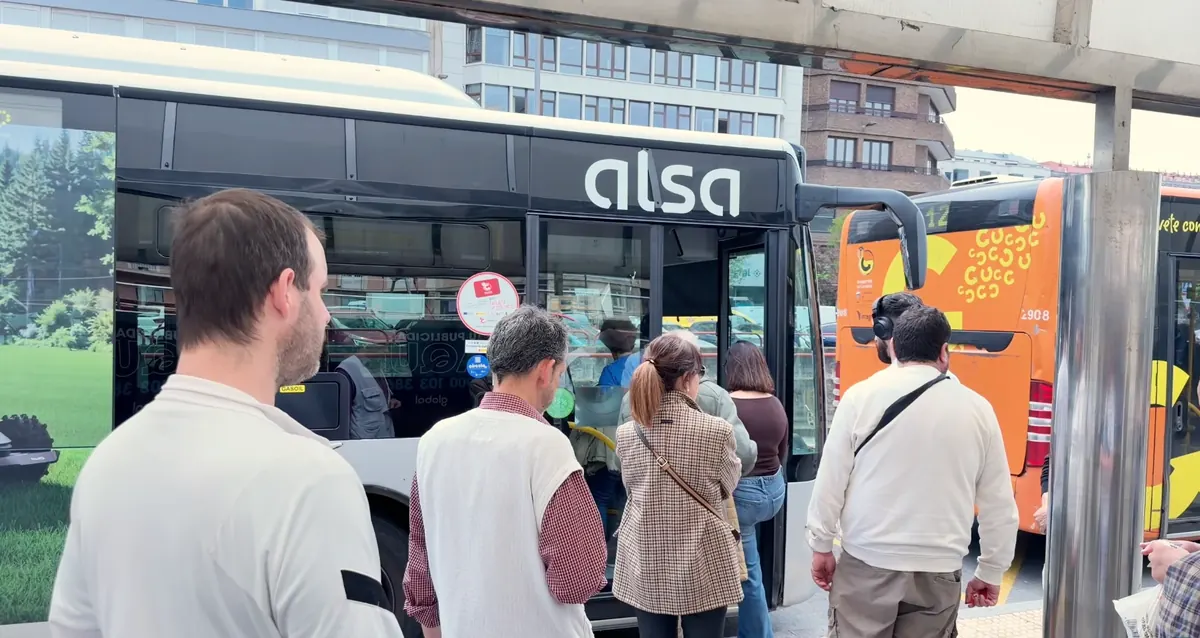
Electronic payment on public transport lives alongside cash. Busae accepts all these methods in the same system, and each operator turns on the ones it needs.
The driver takes the fare and issues the ticket with the Busae Driver app and a printer. Every sale is recorded.
Rechargeable cards: the passenger pays by tapping the card on the validator or the driver’s phone.
Monthly, weekly or yearly passes with unlimited journeys during the period paid for.
The ticket office sells the ticket with a QR code and the Driver app validates it with the device’s camera on boarding.
Contactless EMV debit and credit cards (open payments). This needs a suitable terminal, such as a bank POS or an industrial validator.
The system’s own cards (closed loop) and bank cards (open loop) on the same platform.
ABT
With Account Based Ticketing (ABT), the balance is kept in a cloud account and not only on the card. That way top-ups and spending are controlled from the platform.
Balance, top-ups and spending managed centrally and securely.
Block the cards that should not travel and authorise the ones that should.
Integration with mobile network operators and retail chains, with no Busae apps or extra terminals.
Real case: TransUrb has top-ups integrated with Airtel from mobile phones, even by SMS.
Fares
Every operator has its own fare structure. Busae sets the price automatically according to the type of passenger and the journey.
A single fare per journey, the same along the whole route.
Standard, adult, youth, student, senior or institutional: a price for each type of passenger.
The price depends on the zone or on the boarding and alighting stops.
Subscription cards for frequent riders.
Top-ups
With the Busae Ticket Office app: QR ticket sales plus activation and top-up of prepaid and subscription NFC cards.
Each point works with the Busae Ticket Office app. In some countries, Busae already has partnership agreements.
External top-ups through the ABT integration with mobile network operators and retail chains.
Apps
Electronic fare collection is shared between three apps connected to the same platform.
The bus app: records sales in cash, NFC and QR, and is the core of the system.
For terminals and points of sale: sells QR tickets and activates and tops up NFC cards.
On a handheld NFC terminal, it reads cards and checks tickets on board, and issues fines.
Validation
Fares are validated with Android devices: a phone or tablet with NFC, a POS terminal with a printer or a fixed validator with NFC, QR and EMV.
Each operator chooses the device according to the payment methods it accepts. A Bluetooth relay can unlock turnstiles or gates when the payment is valid.
Control
A fare collection system is only reliable if every sale is recorded, even when the bus loses coverage.
If the bus loses coverage, sales keep being recorded on the device and are synced when the connection returns.
The sales of every bus in a single cash box, available on the platform.
The sales of each route and each bus live from the control centre.
With the passenger counter, compare who boards with the tickets sold and spot fare evasion.
The Busae Inspector app checks cards and tickets on board and records fines.
The Android device can be locked so that it only runs Busae.
Reports
Revenue reports answer one question: how much was collected, where and how.
ITS platform
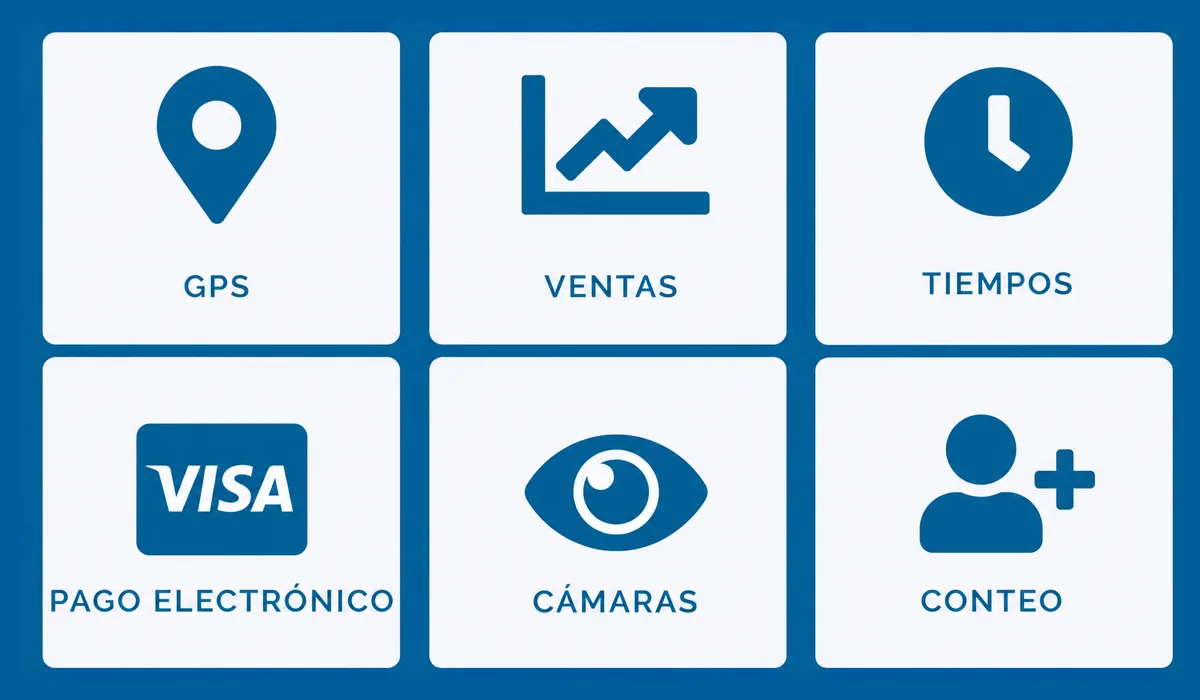
Electronic fare collection is a module of the same platform used to manage the fleet. You do not need another supplier for the rest of the operation.
Electronic fare collection integrated with the AVL system, on the same Driver app.
Cross-check counting with revenue to spot passengers without a ticket.
Review with footage what happened during a sale or a validation.
Android devices to charge, validate and print tickets.
Sales and reports alongside the rest of your operational data.
The price of the fare collection system per bus per month, with no surprises.
Who it is for
Replace cash handling and control the sales of each bus without waiting for the end of the day.
Several bus owners with a shared cloud cash box and each vehicle’s sales in view.
A fare collection system for public transport with centralised data by route, bus and payment method.
A technology partner with Android apps and devices ready for each project.
Whatever it is called where you operate (bus ticketing, fare collection, AFC or electronic payment on public transport), the system is the same.
Cases
«We control sales of 200 buses in real time, in 3 cities. Even NFC cards and subscriptions.»
«213 buses and minibuses with counting, cameras and ticketing. Top-ups integrated with Airtel from mobile phones, even by SMS.»
Questions
It is the set of software and equipment used to charge the fare, validate the journey and control the revenue of every bus. In Busae it includes the Driver, Ticket Office and Inspector apps, the validators and the cloud platform.
Cash, prepaid and subscription NFC cards, QR codes and EMV bank cards. Each operator turns on the ones it needs.
Yes, with contactless EMV cards, but a suitable terminal is needed, for example a PAX A920 POS or an industrial validator. An ordinary phone or tablet cannot accept bank cards.
It is a model in which the passenger’s balance is kept in a cloud account. It lets you manage top-ups and spending centrally and block cards with blacklists.
Closed loop means the system’s own cards, such as prepaid or subscription NFC cards. Open loop means EMV bank cards (open payments). Busae accepts both.
Yes. If the bus loses coverage, sales keep being recorded on the device and are sent to the platform when the connection returns.
At a network of top-up points, each with the Busae Ticket Office app. With the ABT integration they can also top up at shops and mobile network operators. In some countries Busae already has partnership agreements: ask us.
Yes, the phone or tablet only needs NFC.
Yes. The Ticket Office app sells tickets with a QR code and the Driver app validates them on boarding with the device’s camera.
It depends on the features used, but the range is 1.2 to 2 GB a month.
Busae comes at a fixed price per bus per month. The Ticket Office and Inspector apps and the external ABT integrations have their own fee. See pricing.
Tell us how many buses you run and how you collect fares today. We will show you the platform working and give you a fixed price per bus.

